Ever wondered how your computer runs smoothly, from booting up to running complex apps? It all starts with system programming—the invisible force powering the digital world.
What Is System Programming?
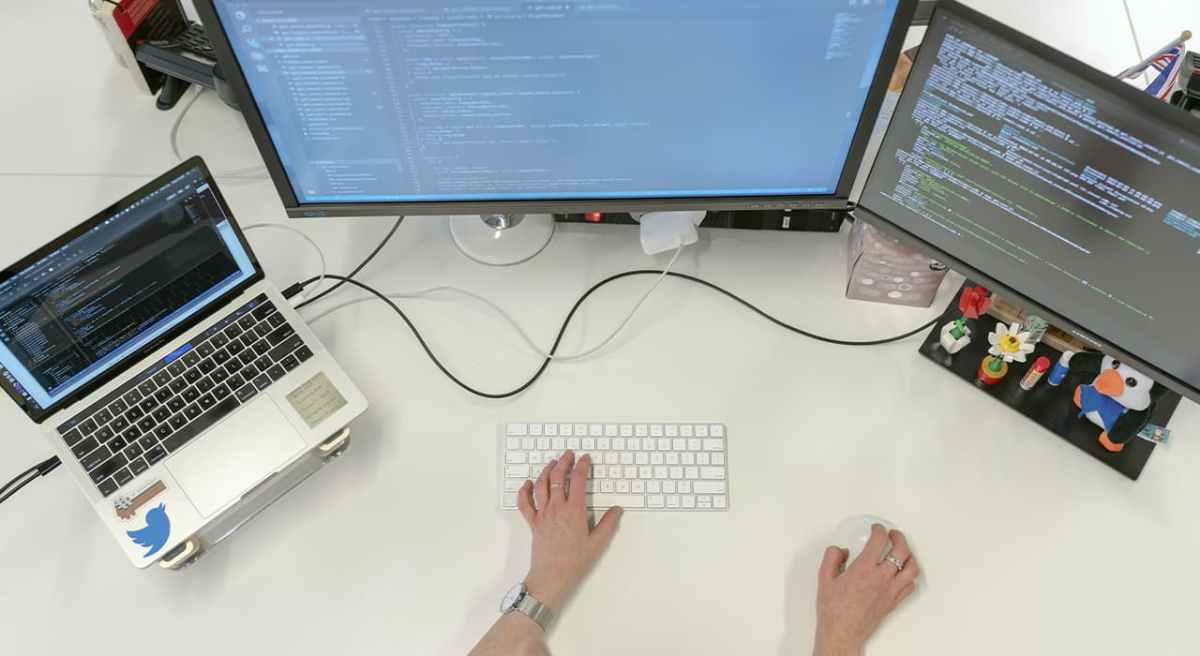
System programming refers to the development of software that controls and enhances computer hardware and operating systems. Unlike application programming, which focuses on user-facing software like web browsers or games, system programming deals with low-level operations that ensure the entire system runs efficiently and securely.
Core Definition and Scope
System programming involves writing code that interacts directly with hardware components such as the CPU, memory, disk drives, and network interfaces. This type of programming is essential for creating operating systems, device drivers, firmware, and system utilities like file managers and disk formatters.
- Operates at a level close to the hardware
- Requires deep understanding of computer architecture
- Focuses on performance, reliability, and resource management
According to Wikipedia, system programming is characterized by its need for efficiency and direct access to system resources, often bypassing the abstractions provided by high-level languages.
Difference Between System and Application Programming
While application programming aims to solve end-user problems—like managing finances or editing photos—system programming ensures the platform those applications run on is stable and efficient.
- Application Programming: Uses high-level languages (Python, JavaScript), focuses on UI/UX, runs in user space.
- System Programming: Uses low-level languages (C, Assembly), focuses on performance and stability, runs in kernel or privileged mode.
“System programming is not about making things easy for the programmer; it’s about making things fast and reliable for the machine.” — Anonymous systems engineer
Historical Evolution of System Programming
The roots of system programming trace back to the earliest days of computing, when every instruction had to be manually coded. Over time, it evolved alongside hardware advancements and the growing complexity of software systems.
Early Days: Machine and Assembly Languages
In the 1940s and 1950s, programmers wrote directly in machine code—binary instructions the CPU could execute. This was error-prone and time-consuming. The introduction of assembly language allowed symbolic representation of instructions, making coding slightly more manageable.
- First-generation languages were hardware-specific
- No operating systems—each program controlled the machine directly
- Programmers had to manage memory and I/O manually
For example, the ENIAC required physical rewiring to change programs, highlighting the primitive state of early system control.
Rise of Operating Systems and High-Level System Languages
The 1960s and 70s saw the birth of operating systems like UNIX, which created a need for system software that could manage hardware abstraction, multitasking, and file systems. This era gave rise to C, a language designed specifically for system programming.
- Dennis Ritchie developed C at Bell Labs to rewrite UNIX
- C provided low-level access while offering structured programming features
- Enabled portability across different hardware platforms
The success of UNIX and C demonstrated that system programming could be both powerful and portable, setting the foundation for modern computing.
Key Languages Used in System Programming
Choosing the right language is critical in system programming, where performance and control are paramount. While several languages can be used, a few dominate due to their efficiency and hardware access capabilities.
C: The King of System Programming
C remains the most widely used language in system programming. Its ability to provide fine-grained control over memory and hardware, combined with minimal runtime overhead, makes it ideal for building operating systems, kernels, and embedded systems.
- Direct memory manipulation via pointers
- Minimal abstraction layers
- Extensive use in Linux, Windows, and macOS kernels
As noted by GNU C Library, C’s standard library provides essential interfaces for system calls, memory management, and process control—cornerstones of system-level development.
Assembly Language: Closest to the Metal
Assembly language is used when maximum control and performance are required. It is often employed in bootloaders, interrupt handlers, and performance-critical sections of code.
- One-to-one mapping with machine instructions
- Used for CPU-specific optimizations
- Essential in embedded systems and firmware development
Despite its complexity, assembly is still taught in computer science curricula because it helps developers understand how high-level code translates into machine execution.
Modern Alternatives: Rust and Go
In recent years, new languages like Rust have emerged as strong contenders in system programming. Rust offers memory safety without garbage collection, making it suitable for building secure and efficient system software.
- Rust prevents common bugs like null pointer dereferencing and buffer overflows
- Adopted by Microsoft and Google for parts of their OS development
- Used in the Redox OS and parts of the Linux kernel
Go, while more commonly used for servers and networking, is also gaining traction in system tools due to its concurrency model and fast compilation.
Core Components of System Programming
System programming involves several foundational components that work together to manage hardware and provide services to applications. Understanding these components is essential for anyone diving into low-level development.
Operating System Kernels
The kernel is the core of an operating system, responsible for managing system resources, enforcing security, and providing abstractions for hardware. System programmers often work on kernel modules, device drivers, and system calls.
- Monolithic vs. microkernel architectures
- Handles process scheduling, memory management, and I/O
- Exposed to applications via system call interfaces (e.g., POSIX)
For example, the Linux kernel is written primarily in C and is one of the largest open-source system programming projects in the world. You can explore its source at kernel.org.
Device Drivers
Device drivers are software components that allow the OS to communicate with hardware devices like printers, graphics cards, and network adapters.
- Translate OS commands into device-specific signals
- Run in kernel space, requiring high reliability
- Must handle interrupts and direct memory access (DMA)
Writing drivers is one of the most challenging aspects of system programming due to the need for stability and compatibility across hardware variants.
Firmware and Bootloaders
Firmware is low-level software embedded in hardware, such as BIOS or UEFI in PCs. Bootloaders like GRUB or LILO are responsible for loading the OS into memory during startup.
- Firmware initializes hardware before the OS starts
- Bootloaders manage multi-boot configurations and kernel selection
- Often written in C and Assembly for performance and control
UEFI, the modern replacement for BIOS, is a complex system programming environment that supports networking, file systems, and secure boot features.
System Programming and Performance Optimization
One of the primary goals of system programming is to maximize performance. Since system software runs constantly and affects all other programs, even small inefficiencies can have large impacts.
Memory Management Techniques
Efficient memory use is crucial in system programming. Techniques like paging, segmentation, and virtual memory allow the OS to manage limited RAM effectively.
- Paging divides memory into fixed-size blocks for easier management
- Virtual memory allows processes to use more memory than physically available
- Memory-mapped I/O enables direct access to hardware registers
System programmers must understand how the Memory Management Unit (MMU) works and how to minimize page faults and memory leaks.
CPU and I/O Optimization
System software must minimize CPU idle time and optimize I/O operations, which are often the bottleneck in system performance.
- Interrupt handling must be fast and non-blocking
- Direct Memory Access (DMA) reduces CPU load during data transfers
- Context switching between processes should be as efficient as possible
Profiling tools like perf on Linux help system programmers identify performance bottlenecks in kernel code.
Concurrency and Parallelism
Modern systems rely on multi-core processors, making concurrency a key concern in system programming. The kernel must manage threads, synchronization, and resource sharing safely.
- Use of mutexes, semaphores, and atomic operations
- Avoiding race conditions and deadlocks
- Real-time systems require deterministic scheduling
For instance, the Linux kernel uses the Completely Fair Scheduler (CFS) to balance CPU time across processes efficiently.
Security in System Programming
Because system software operates with high privileges, security is a top priority. Vulnerabilities in system code can lead to full system compromise.
Privilege Levels and Access Control
Modern CPUs support multiple privilege rings (e.g., Ring 0 for kernel, Ring 3 for user apps). System programming must enforce these boundaries to prevent unauthorized access.
- Kernel mode allows full hardware access
- User mode restricts access to system resources
- System calls are the only safe way for user programs to request kernel services
Proper use of privilege separation helps contain damage from malicious or buggy applications.
Common Security Vulnerabilities
System programming is prone to specific security issues due to direct memory access and low-level operations.
- Buffer overflows: Writing beyond allocated memory, often exploited in attacks
- Use-after-free: Accessing memory after it has been freed
- Privilege escalation: Exploiting bugs to gain higher access rights
These vulnerabilities have led to major exploits like the Heartbleed bug in OpenSSL, which stemmed from a buffer over-read in C code.
Secure Coding Practices
To mitigate risks, system programmers must follow strict coding standards and use modern tools.
- Use static analyzers like Coverity or Clang Static Analyzer
- Adopt memory-safe languages like Rust where possible
- Regular code audits and fuzz testing
Google’s Project Zero and Microsoft’s Secure Development Lifecycle (SDL) emphasize secure system programming practices across their OS development teams.
Tools and Environments for System Programming
Developing system software requires specialized tools that allow debugging, testing, and deployment in low-level environments.
Compilers and Linkers
Compilers like GCC and Clang are essential for translating C and Assembly code into machine instructions. Linkers combine object files into executable binaries, resolving symbols and memory layout.
- GCC supports multiple architectures and optimization levels
- LLVM/Clang offers better error messages and modular design
- Linkers handle kernel image creation and symbol resolution
For example, building the Linux kernel involves using GCC with specific flags to generate a bootable image.
Debuggers and Profilers
Debugging system code is challenging because traditional debuggers may not work in kernel space. Tools like GDB, KGDB (for kernel debugging), and QEMU are commonly used.
- GDB allows step-by-step execution and memory inspection
- KGDB enables remote debugging of a running kernel
- QEMU emulates hardware for safe testing
These tools help developers trace crashes, memory leaks, and race conditions in system software.
Version Control and Collaboration
Large system programming projects like operating systems rely on version control systems like Git. Open-source collaboration platforms like GitHub and GitLab enable global contributions.
- Linux kernel development uses Git for managing thousands of patches
- Code reviews ensure quality and security
- CI/CD pipelines automate testing and integration
Linus Torvalds, who created Linux, also developed Git to manage the kernel’s source code efficiently.
Future Trends in System Programming
As technology evolves, so does system programming. Emerging trends are shaping how low-level software is developed and deployed.
Rise of Memory-Safe Languages
With increasing security concerns, languages like Rust are being adopted to replace C in critical system components. Rust’s ownership model prevents many memory-related bugs at compile time.
- Microsoft is rewriting parts of Windows in Rust
- Linux kernel now accepts Rust modules
- Google uses Rust in Android system components
This shift could significantly reduce vulnerabilities in system software over the next decade.
Virtualization and Containerization
Modern system programming must support virtual machines and containers, which abstract hardware for cloud and microservices environments.
- Hypervisors like KVM and Xen are written in C and Assembly
- Container runtimes like runc interact with the kernel via cgroups and namespaces
- System programmers must understand isolation and resource control
These technologies rely heavily on system programming to provide secure and efficient virtual environments.
AI and Automated System Tuning
Artificial intelligence is beginning to influence system programming through automated performance tuning and anomaly detection.
- AI-driven schedulers can optimize CPU allocation dynamically
- Machine learning models predict system failures
- Automated code generation for drivers and firmware
While still in early stages, AI-assisted system programming could revolutionize how low-level software is developed and maintained.
What is the main purpose of system programming?
The main purpose of system programming is to develop software that directly interacts with computer hardware and manages system resources, enabling efficient and secure operation of operating systems, device drivers, and other low-level components.
Which programming languages are best for system programming?
C and Assembly are the most traditional and widely used languages for system programming. However, Rust is gaining popularity due to its memory safety features, while Go is used for system tools and services.
Is system programming still relevant today?
Yes, system programming is more relevant than ever. It underpins modern computing, from operating systems and cloud infrastructure to embedded devices and cybersecurity.
How is system programming different from application programming?
System programming focuses on low-level hardware interaction and system efficiency, often running in kernel mode. Application programming creates user-facing software using high-level abstractions and runs in user space.
Can I learn system programming as a beginner?
While challenging, beginners can learn system programming by starting with C, studying operating systems, and experimenting with small projects like writing a shell or a simple bootloader.
System programming remains the backbone of modern computing, enabling everything from smartphones to supercomputers to function efficiently and securely. While it demands deep technical knowledge and precision, its impact is unparalleled. As new languages like Rust and technologies like AI reshape the field, system programming continues to evolve—remaining a vital, dynamic, and rewarding discipline for developers worldwide.
Further Reading:
